
Environmental Compliance under Construction Law in Bangladesh

Society of Construction Law Bangladesh (SCLB)
Date: 14th Aug 2025
Introduction
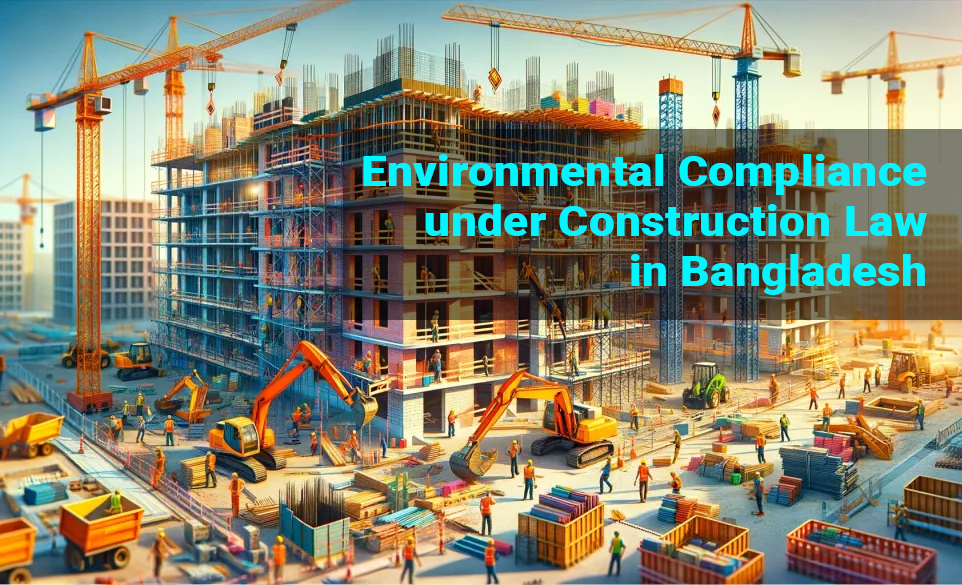
To prevent environmental harm, Bangladesh’s construction law mandates that environmental considerations be integrated from the outset of infrastructure projects, especially as they grow in scale and complexity. Environmental compliance is not an isolated requirement but a core legal obligation embedded within the construction process. Beyond regulating contracts, liability, and architectural standards, construction activities must align with environmental regulations that contractors, employers, and developers must strictly follow. These responsibilities ensure that construction operations adhere to international standards, sustainable development principles, and national environmental policies.
Environmental Clearance Certificate (ECC)
The Environment Conservation Act, 1995 serves as the cornerstone of environmental regulation in Bangladesh. Under Section 12 of the Act, obtaining an ‘Environmental Clearance Certificate (ECC)’ is a fundamental legal requirement for construction projects. This provision prohibits any industrial or construction project from commencing without prior approval from the Department of Environment (DoE). The ECC ensures that a project’s environmental impacts are thoroughly assessed and mitigated before construction begins. For projects located in Ecologically Critical Areas (ECAs), Section 5 of the Act imposes stricter scrutiny. Additionally, Sections 15 and 15A stipulate that non-compliance, such as failing to obtain an ECC or violating its terms, which may result in criminal penalties, including fines and imprisonment.
Legal Obligations for Contractors
Contractors bear significant responsibility for environmental compliance, as they are primarily responsible for executing construction projects. Their obligations include: a) Implementing mitigation measures to control noise and dust pollution; b) Ensuring safe disposal of hazardous materials; c) Properly managing waste generated at construction sites.
Under Sections 15 and 16 of the Environment Conservation Act, 1995, contractors may face criminal penalties, such as fines or imprisonment for failing to obtain an ECC, violating its conditions, or disregarding lawful directives from the DoE. However, contractors may defend themselves by proving due diligence or demonstrating a lack of awareness of the environmental violation, provided such defenses are legally acceptable.
Subcontractors and Suppliers: Shared Liability
Environmental compliance is a shared responsibility among all parties involved in a construction project. Section 20(2)(c) of the Act mandates that subcontractors and material suppliers handle, store, and transport construction materials including hazardous substances safely. This provision reinforces the principle that environmental obligations apply throughout the project lifecycle, from inception to completion.
Roles of Consultants and Engineers
Engineers, architects, and environmental consultants play a crucial role in designing sustainable construction projects. Their responsibilities include: a) Conducting Environmental Impact Assessments (EIAs) where required; b) Assessing potential environmental risks.; c) Incorporating sustainability measures and mitigation strategies into project designs, as stipulated under Section 20(2)(f). Failure to fulfil these duties can result in environmental damage which may lead to legal liability.
Enforcement by the Department of Environment (DoE)
The DoE has robust enforcement powers to ensure compliance. It can: a) Issue administrative notices; b) Impose fines; c) Initiate criminal proceedings for violations. In cases of severe or repeated non-compliance such as commencing construction without an ECC, the DoE may seek court injunctions to halt operations. Section 222 of the Local Government Act, 1972 further strengthens enforcement by allowing legal action when administrative measures are insufficient. This multi-layered enforcement mechanism ensures that environmental regulations are effectively implemented, not merely symbolic.
Environmental Standards: BPM and BATNEEC Principles
While not formally incorporated into Bangladeshi law, internationally recognized principles such as: a) Best Practical Means (BPM), which focuses on practical, context-specific measures to minimize environmental harm; b) Best Available Techniques Not Entailing Excessive Cost (BATNEEC), which encourages cost-effective environmental protection methods.
These principles, derived from UK environmental law (Part II and IIA of the Environmental Protection Act 1990 and the Environment Act 1995), can guide Public-Private Partnership (PPP) projects in Bangladesh. Their adoption can help balance development goals with sustainability, promoting eco-conscious infrastructure in line with global best practices.
Liability for Contaminated Land
As urbanization accelerates, contaminated land has become a growing concern in construction, particularly in redevelopment projects. While UK law (Part IIA of the Environmental Protection Act 1990) provides a detailed framework, similar principles are increasingly relevant in Bangladesh, especially as former industrial sites are repurposed for residential or commercial use. Proactive assessment and remediation of contaminated land can mitigate future environmental liabilities.
Conclusion
Environmental compliance in construction is not merely a technical requirement but a legal obligation under the Environment Conservation Act, 1995, and its regulations. All stakeholders such as employers, contractors, consultants, and suppliers must adhere to environmental standards. The law provides clear enforcement mechanisms, emphasizing sustainable development as Bangladesh continues to grow. By integrating global best practices, the construction sector can achieve resilient, environmentally responsible infrastructure development.
Disclaimer:
The articles published on The Society of Construction Law Bangladesh (SCLBD) website are intended for research and educational purposes only. They are written in good faith to promote knowledge and understanding of construction law. No part of these articles may be reproduced, distributed, or used for any commercial purpose without prior written permission from SCLBD. While every effort has been made to ensure the accuracy of the information, Readers are advised to consult legal professionals for advice on particular matters.